
主旨报告
Deep language as a cognitive model for the development and processing of natural language2026年6月12日
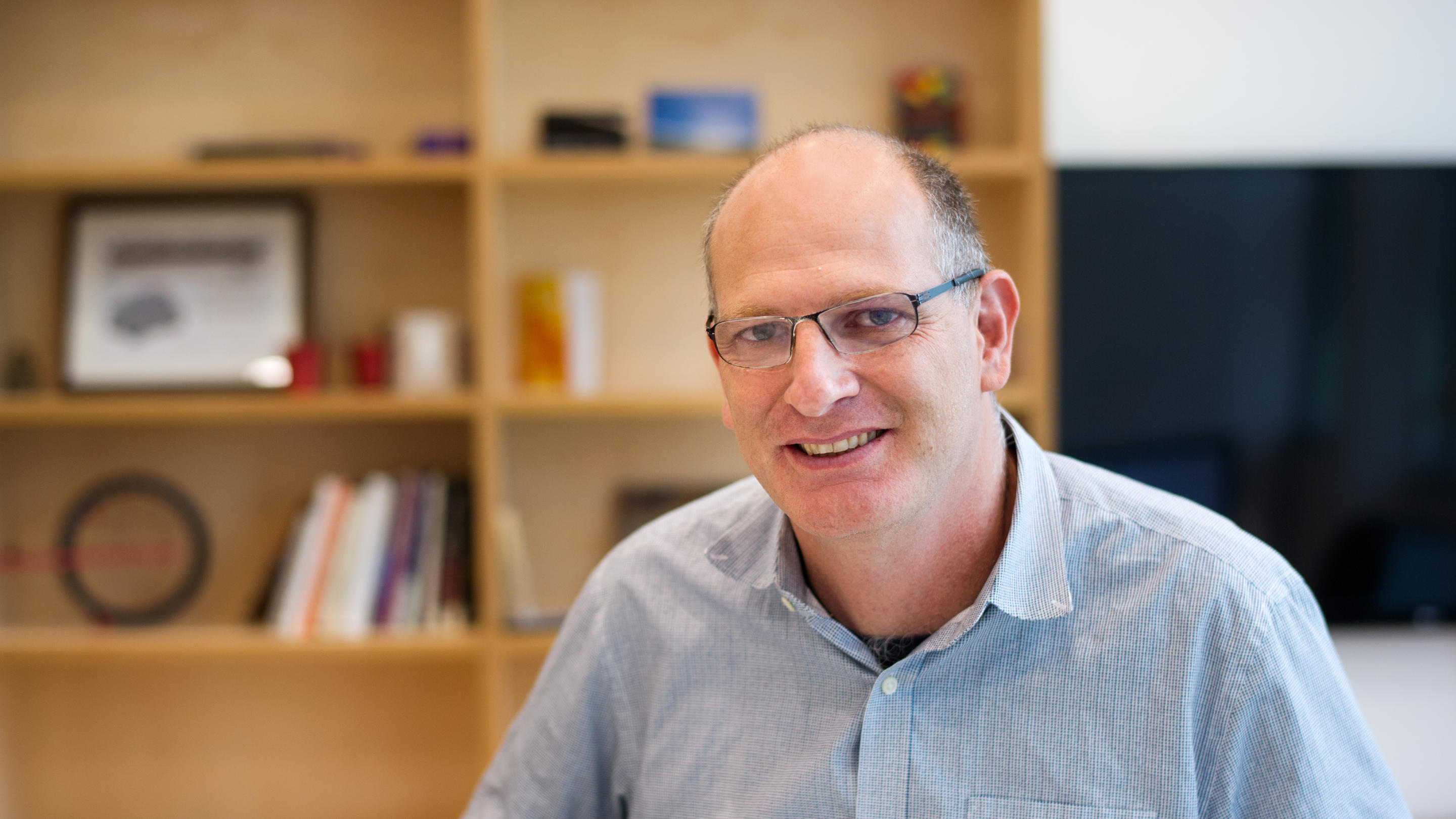
Uri Hasson
Professor of Psychology and Neuroscience, Princeton University
Uri Hasson is a distinguished Professor of Neuroscience and Psychology at Princeton University. He was raised in Jerusalem and earned his bachelor's degree in Philosophy from the Hebrew University. Dr. Hasson obtained his Ph.D. in Neurobiology from the Weizmann Institute in Israel and later served as a postdoctoral fellow at New York University before joining Princeton University. His research primarily focuses on the mechanisms by which the brain processes real-world information and interacts with the environment. He is particularly interested in face-to-face communication and in humans' natural language processing abilities. In recent years, Dr. Hasson's work has expanded to include large language models as a computational framework for modeling the neural foundations of natural language processes. Additionally, he explores how deep learning methods can be applied to examine the development of language in children as it occurs in their home environments.
Abstract/报告摘要
Understanding human learning and thinking involves models that capture both the complexity of real-world experiences and the biological plausibility of the brain. Traditional computational models often generalize poorly beyond controlled laboratory conditions. At the same time, state-of-the-art deep learning systems—despite their success in naturalistic tasks—are developmentally implausible, data-hungry, and disconnected from human cognition. We aim to bridge this divide by developing cognitively plausible learning agents grounded in children's natural experiences. To achieve this, we are developing the First 1000 Days (1kD) dataset, a comprehensive, longitudinal audiovisual record of children's daily environments from birth to age three. It provides unprecedented detail on the developmental conditions that shape learning in individual children. Using 1kD recordings, we aim to develop child-centered learning agents that learn in socially grounded, multimodal contexts, mirroring infant development. Additionally, we are aligning AI models directly with human neural data by comparing their internal representations to invasive electrocorticography (ECoG) recordings of natural language processing. Together, our research creates a new, unified approach to ecologically valid, out-of-the-lab cognitive neuroscience—one that combines developmental data, embodied learning agents, and neural alignment to better understand the core processes underlying human cognition. By analyzing cognition in rich, dynamic, and real-world settings, we seek to discover general learning principles that are both biologically and cognitively feasible.